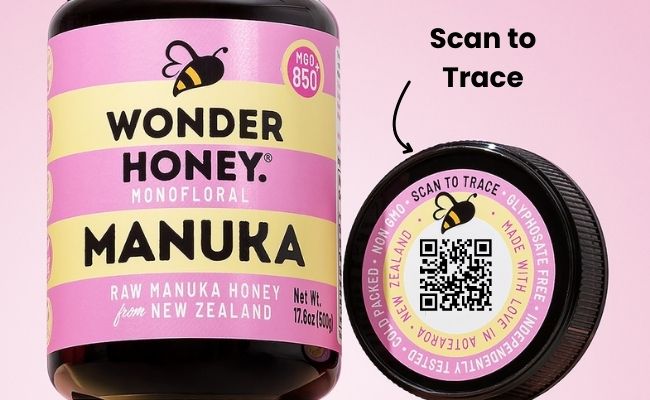
We think a lot about what goes around our honey, not just what's in the jar. Here's an honest look at why Wonder Honey uses PET plastic jars, how PET compares with glass, and what it means for the environment.
Why we use PET
Not all plastics are equal. We chose PET (polyethylene terephthalate, resin code #1) because it is one of the most widely used and well-understood food-grade materials in the world.
BPA & phthalate free. Our PET jars are free from BPA and phthalates. (BPA is associated with polycarbonate, resin code #7, not PET.)
Food-safe and chemically stable. PET is inert in normal use, which is why it's so widely used for food and drink.
Light and shatterproof. It won't break in transit or in your kitchen.
PET vs glass
Glass is often assumed to be the "premium" or greener choice, but it's not that simple:
Weight & shipping: glass is much heavier than PET, so shipping it uses more fuel and creates more transport emissions, jar for jar.
Breakage: glass can shatter in transit, leading to damaged orders and waste.
Manufacturing energy: producing glass is energy-intensive.
Safety: both glass and food-grade PET are considered safe for food; PET simply travels better.
For a product that ships internationally, a lighter, shatterproof jar means fewer breakages and lower transport emissions.
Packaging & the environment
No packaging is perfect, and we keep reviewing our choices. PET is one of the most widely collected and recycled plastics in the markets we sell to, and its low weight reduces the footprint of shipping. We pair our packaging choice with carbon-neutral shipping. We'd always encourage you to recycle your jar through your local kerbside or container-return scheme.
Why tinted jars?
We use tinted jars to help protect the honey from light, which can affect natural honey over time. Specifically, tinting helps reduce:
Photo-oxidation — light-driven changes to the honey.
Colour fading — keeping the honey looking as it should.
Loss of delicate aroma compounds — helping preserve flavour and character.
Packaging FAQs
Is PET safe? Yes — PET is one of the most widely used food-safe packaging materials and our jars are BPA- and phthalate-free.
Which plastics contain BPA? BPA is associated with polycarbonate (resin code #7). Our jars are PET (#1) and are BPA-free.
Is PET recyclable? Yes — PET (#1) is one of the most commonly recycled plastics. Please recycle your empty jar locally.
Why not glass? Glass is heavier and breakable, which increases shipping emissions and damaged orders; food-grade PET is a lighter, safe alternative.
Why is the jar tinted? To help protect the honey from light and preserve its colour, aroma and quality.
PET vs Glass - Safety & Quality
Yes PET is still a plastic and as such it is comes with a certain dark shadow over it. However again, we wanted to fact check some of what we have heard as discussion points with friends and customers, to really distill what is the truth.
We have created a comparison table below of the different type of food grade storage options below and how they compare with each other in terms of key health concerns
Wonder Honey PET
Glass
HDPE
PP
PVC
Chemically Inert
Exhibits Endocrine Activity
BPA &BPS Free
Phthalate Free
PFAS Free
As you can see both Glass and PET are equals when it comes to comparison as they are the two most safest type of food packaging.
While PVC comes out the worst!!
(Beware - most of the water pipes that bring water into your house are made of PVC!!!)
If you want to learn more and view the research on PET and how it compares to other plastics then please click on the button below
We have to also consider the lids and the process the honey goes under
Packing Honey in Glass
Packing large volumes of honey in glass usually means two things
The honey is heated
PVC seals are used
We will describe below why this creates a major issue if you are trying to sell high quality Manuka
Honey is Usually Heated to High Temperatures
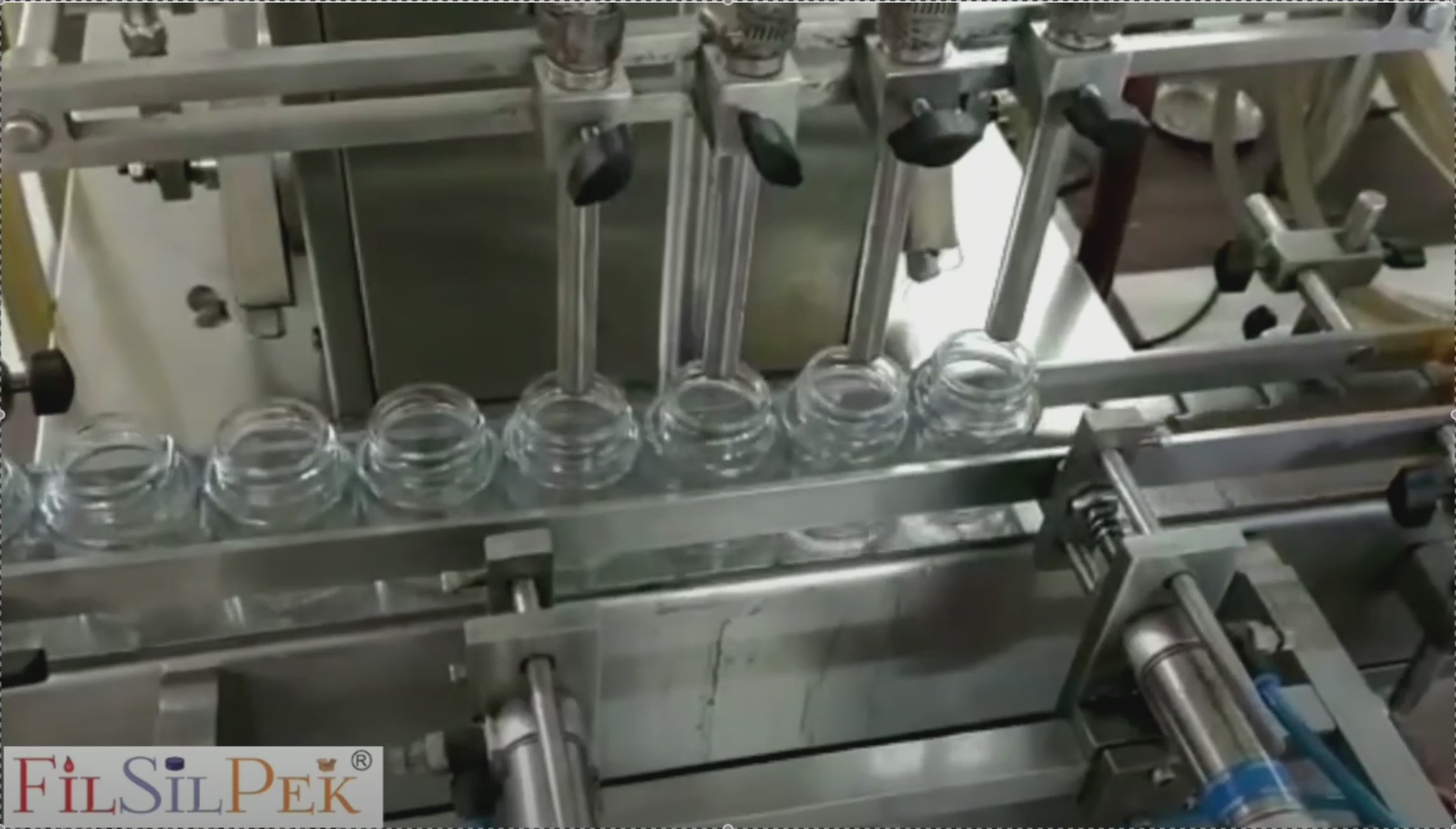
Most honey that is packed into jars is heated (hot filled) as per the process below
Hot Fill Process for Honey in Glass Jars:
Heating – Honey is typically heated to around 50–60°C (122–140°F) to reduce viscosity, making it easier to fill and ensuring proper sealing.
Filling – The warmed, liquid honey is poured into glass jars.
Capping – The jar is immediately sealed while the honey is still warm.
Cooling – As the honey cools, it creates a slight vacuum inside the jar, vacuum sealing the jar and extending shelf life.
So why hot fill honey jars?
✅ Prevents crystallization – Heating reduces the likelihood of premature crystallization. ✅ Easier and faster filling – Warm honey flows better, preventing air bubbles and inconsistencies. ✅ Sterilization – Helps kill potential yeast and bacteria, improving shelf life. ✅ Better sealing – Creates a vacuum seal in glass jars, preventing leaks and spoilage
Video: Example of hot filled honey jars
Why is this bad?
High heat damages the honey's nutrient profile, temperatures over 40C (104 F) destroy the enzymes, and heat can destroy the peroxide activity in the honey making it less active
PVC Seals Are Used
Honey packed in glass jars undergo a different sealing process as induction seals do not work on glass. In honey packed in glass - the lids used are usually metal, with the inside of the lid being coated in a substance call Plastisol
Plastisol is the name for PVC substance that acts as a rubbery gasket to seal over glass.
You will recognise this if you lift up the lid of a mason jar and have a look at the rubbered side - in most cases that is plastisol
The problems with Plastisol are two fold
It is made of 2 highly toxic plastic components
The key components of plastisol are...
PVC Resin – The solid polymer that forms the base of plastisol. PVC (Polyvinyl Chloride) is a rigid polymer on its own but becomes flexible when combined with plasticizers. PVC is a highly toxic form of plastic, with high leaching probability and exhibits high endocrine disruption activity. It is the most toxic form of plastic studied in the research article below.
Plasticizers – This is the liquid component (phthalates, adipates, and other compounds) that softens and makes the PVC resin flexible. The amount and type of plasticizer affect the consistency and performance of the plastisol. Phthalates are known to interfere with the body's hormonal system, and are also know to reduce fertility and can also interfere with fetal development. The are also considered an obesogen.
It can erode quickly
Plastisol needs to be stored under strict conditions, and especially away from UV light and higher humidity which can make the substance brittle. Overtightening the lid can also lead to seal erosion. Seals are typically have a shelf life of 2 years or less.
The chances of the seal deteriorating even at a microscopic level, means there is a risk for contamination of PVC particles and hopefully if you have read the above you will understand the PVC is the most highly toxic form of plastic.
Health Concerns with Glass Jars and Plastisol (PVC) Liners
The migration of plasticizers from PVC gaskets in food contact applications, such as lids for glass jars containing oily foods, highlights a persistent failure by many lid manufacturers to meet legal requirements for over a decade.
A 2022 Swiss national campaign analyzing 109 food samples with free edible oil in glass jars confirmed ongoing issues. Of these, 27 samples were non-compliant due to excessive plasticizer migration from PVC gaskets, particularly in high-oil-content foods. The rate of non-compliance was similar to a decade earlier, indicating little progress. Notably, 26% of samples used non-PVC sealing materials, which contributed to a lower overall non-compliance rate, demonstrating that alternative materials can significantly reduce migration issues. Most oily foods packed in jars with plasticized PVC gaskets should not have been marketed due to these violations.
Advantages of PET Jars
1. Cold Filling Process: PET jars allow for a cold filling process, eliminating the need to heat honey. This method preserves the natural enzymes, antioxidants, and antibacterial properties of honey, ensuring consumers receive its full health benefits.
2. Reduced Risk of Chemical Contamination: High-quality, food-grade PET is designed to be safe for food contact, with stringent regulations ensuring it doesn’t leach harmful substances into the product. This reduces the risk of chemical contamination compared to plastisol liners in glass jar lids.
Conclusion
While glass jars have been a popular choice for honey packaging, the potential health risks associated with plastisol liners and the hot filling process are significant considerations. PET jars, with their ability to preserve the natural qualities of honey through cold filling and their reduced risk of chemical contamination, gives us a compelling better alternative for our precious honey..
PET vs Glass - Environment
energy
The Manufacturing of PET jars products 1/6 the carbon footprint of Glass jars
Shipping
The shipping of a full PET honey jar, produces 1/2 the CO2 of shipping a full glass jar
Total Life Cycle
Overall life cycle assessment of PET jars is between 1/4 to 1/5 of the carbon footprint of glass
Recyclability
PET recycling is actually more common/accessible in the markets we sell to
energy
The Manufacturing of PET jars products 1/6 the carbon footprint of Glass jars
Shipping
The shipping of a full PET honey jar, produces 1/2 the CO2 of shipping a full glass jar
Total Life Cycle
Overall life cycle assessment of PET jars is between 1/4 to 1/5 of the carbon footprint of glass
Recyclability
PET recycling is actually more common/accessible in the markets we sell to
Die Bestellung wurde sofort bestätigt und sehr schnell und. Der Honig ist ausgezeichnet. Mein Mann hatte ein Glas geschenkt bekommen, seine Reflux Symptome in der Nacht sind durch die regelmäßige Einnahme verschwunden. Etwa Zwei Wochen nachdem das Glas leer war, kamen die Symptome wieder. Der Honig ist tatsächlich ein Wunder Honig ☺️