

Article: Manuka Honey, Immunity and Cytokines: Nature’s Dialogue with Your Immune System

Manuka Honey, Immunity and Cytokines: Nature’s Dialogue with Your Immune System
When you enjoy a spoonful of Manuka honey, you're enjoying a natural wholefood — and one scientists find genuinely interesting. Beyond its flavour, researchers have studied how compounds in Manuka honey interact with immune cells in the laboratory, particularly through signalling molecules called cytokines. Here's a plain-English look at that emerging research. This is background science, not health advice, and we make no medical claims.
Why cytokines matter
Cytokines are small proteins that immune cells use to communicate — a bit like text messages telling cells to mobilise, coordinate repair, or calm down. A balanced cytokine response is part of normal immune function, which is why substances that appear to interact with cytokines are of scientific interest.
What laboratory research has explored
Immune cells in the lab
An early study by Tonks et al. (2003) found that human monocytes exposed to honey released more of certain cytokines than sugar-only controls, suggesting something beyond sugar was involved. Follow-up work (Tonks et al. 2007) isolated a small (~5.8 kDa) component of Manuka honey that triggered cytokine release via the TLR4 receptor pathway in laboratory cells.
Skin cells
In a 2010 study, human keratinocytes (skin cells) treated with honey in the lab showed changes in cytokine and enzyme expression involved in tissue remodelling (Majtan et al. 2010).
Larger molecules
New Zealand research has pointed to larger molecules such as arabinogalactan proteins (AGPs) as contributors to honey's activity in these laboratory models (Gannabathula et al. 2012).
Important context
Almost all of this work is in vitro (cells in the lab) or in animal models. It tells us Manuka honey is a fascinating natural product worth studying — it does not show that eating honey treats, prevents or cures any condition in people. Large human studies are still needed.
What makes Manuka unique
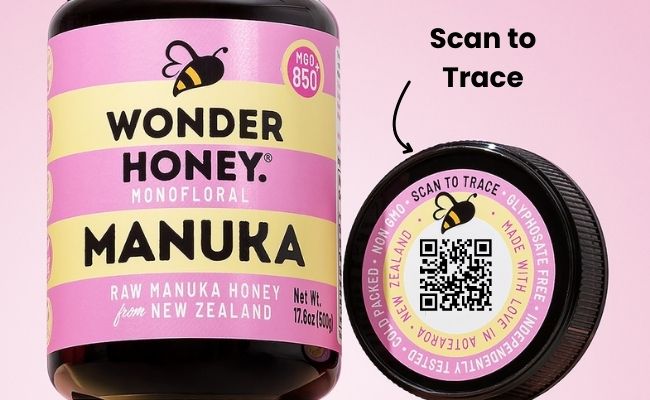
Floral source, processing, heat exposure, storage and batch all affect a honey's natural profile. Heating in particular can degrade delicate components — which is why we keep our honey raw and verify every batch against 26 authenticity and quality markers. Enjoy Wonder Honey for what it is: a pure, traceable, delicious natural wholefood.
These statements have not been evaluated by regulators. This product is a food and is not intended to diagnose, treat, cure or prevent any disease.
References
- Tonks A.J., et al. (2003). Honey stimulates inflammatory cytokine production from monocytes. Cytokine, 21(3), 242–247.
- Tonks A.J., et al. (2007). A 5.8-kDa component of Manuka honey stimulates immune cells via TLR4. Journal of Leukocyte Biology, 82, 1147–1155.
- Majtan J., et al. (2010). Effect of honey and MRJP1 on cytokine and MMP-9 expression in keratinocytes. Experimental Dermatology. PubMed
- Gannabathula S., et al. (2012). Arabinogalactan proteins and the immunostimulatory properties of NZ honeys. Food Chemistry. PubMed


Leave a comment
This site is protected by hCaptcha and the hCaptcha Privacy Policy and Terms of Service apply.